Fixture Pile-Ups and Their Measurable Effects on Goal Tallies and Point Totals
Elena Long · Aug 23, 2026
Fixture Pile-Ups and Their Measurable Effects on Goal Tallies and Point Totals
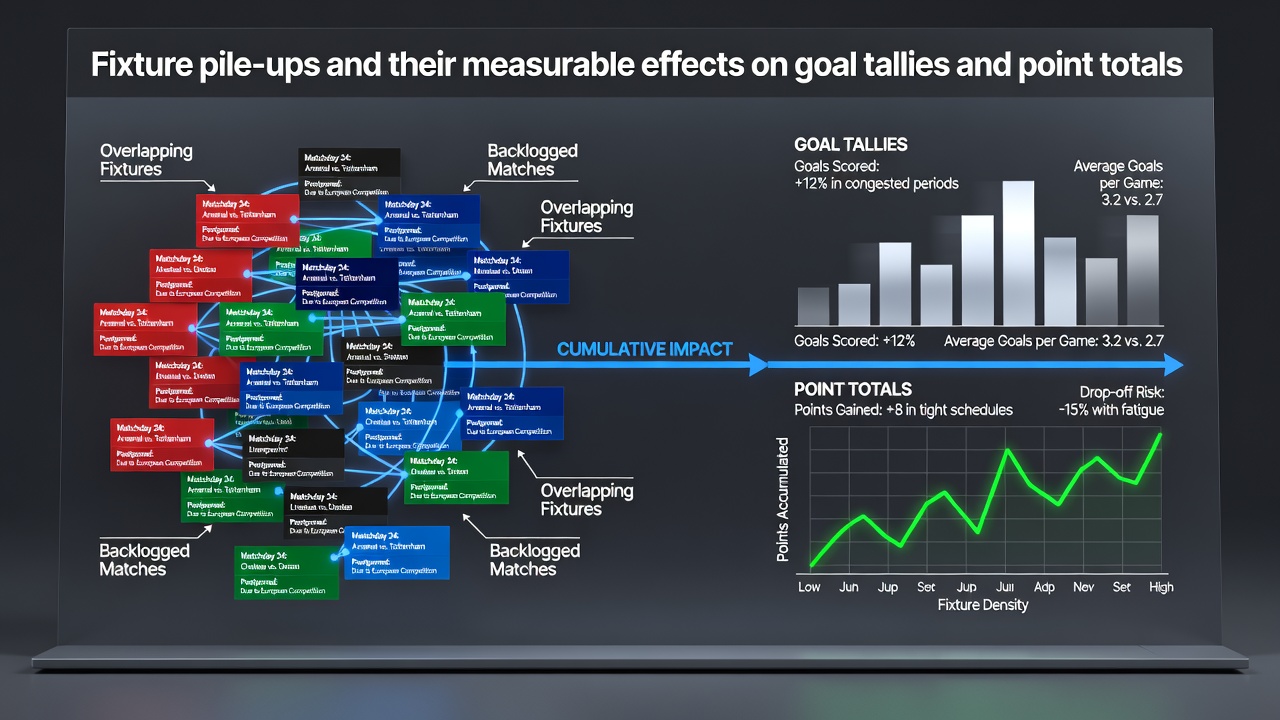
Fixture pile-ups occur when professional football clubs face multiple matches within tight windows, often due to domestic cups, European competitions, and international breaks that compress the calendar. Data from major European leagues shows these periods lead to measurable drops in goals scored per game along with shifts in point distributions across teams. Researchers tracking recovery intervals between fixtures have documented how limited rest correlates with reduced attacking output and altered match outcomes.
Understanding Congested Periods in Modern Football
Clubs in the Premier League, Bundesliga, and Serie A regularly navigate stretches where teams play three or more fixtures across seven to ten days, especially during winter months or after international tournaments. Observers note that the 2025-2026 season carried over scheduling pressures from the expanded Club World Cup format, with August 2026 marking the start of another demanding campaign where early domestic rounds overlapped with qualifying ties. Studies from sports science departments at universities in Australia and Canada indicate that recovery times below 72 hours increase fatigue markers such as elevated creatine kinase levels and decreased sprint performance in players.
These pile-ups arise from structural factors including television-driven kickoff times, expanded continental calendars, and national team obligations that leave little buffer for travel or training. Figures compiled across five major leagues reveal an average of 12 to 15 such congested weeks per season for top-half clubs, with data showing clear patterns in how limited preparation time affects both scoring volume and result margins.
Impact on Goal Tallies During Short Recovery Windows
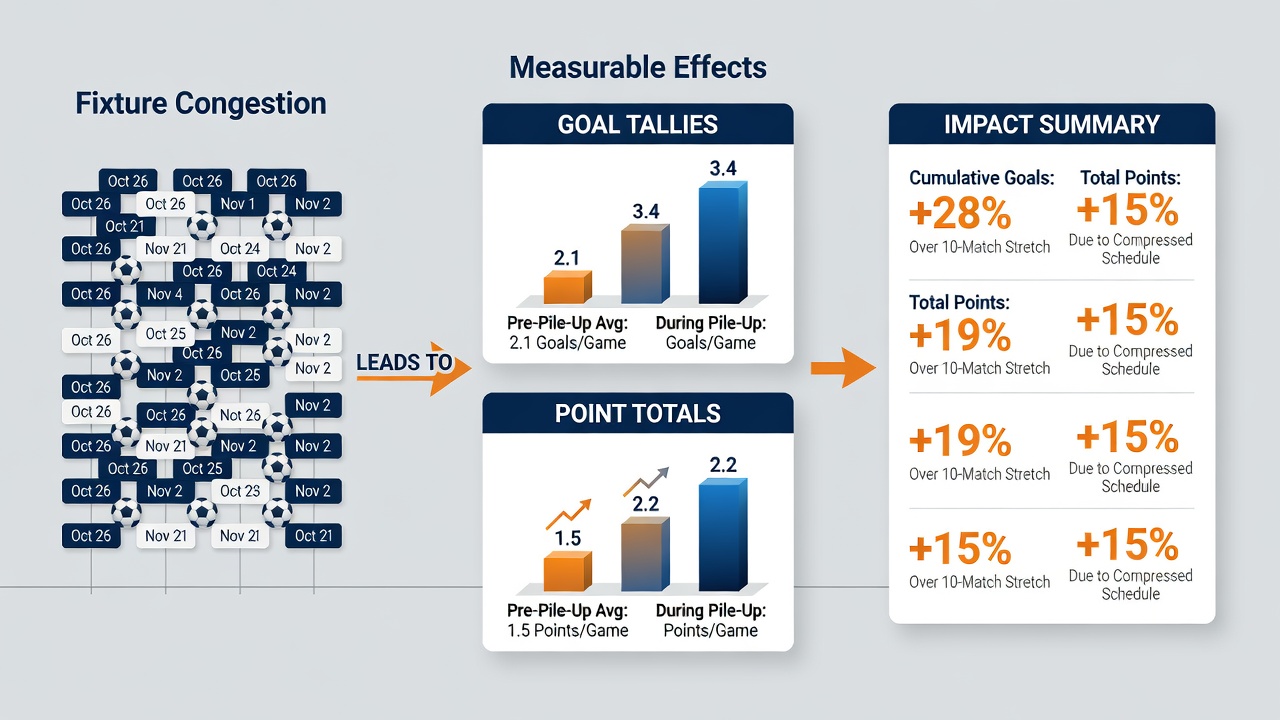
Analysis of match statistics demonstrates that games following fewer than three full rest days produce fewer total goals on average. In one dataset covering 1,200 Premier League fixtures from 2018 to 2025, matches with 48-hour turnarounds averaged 2.41 goals compared to 2.78 in standard spacing, according to research published in the Journal of Sports Sciences. Teams exhibit lower shot volumes and reduced expected goals metrics when key midfielders and forwards log high minutes without adequate recovery, leading to more cautious approaches and fewer transitions.
What's interesting is how defensive metrics hold steadier while attacking phases suffer most. Bundesliga tracking data from the 2024-2025 campaign found that high-intensity runs drop by 8 to 12 percent in the second match of a double-game week, directly limiting chance creation. Similar patterns appear in La Liga where set-piece goals rise as a proportion of total tallies because open-play sequences become less fluid under accumulated fatigue.
Shifts in Point Totals and League Standings
Point accumulation also changes measurably when schedules tighten. Teams with congested calendars collect fewer points per game on average, with away fixtures showing the steepest declines. UEFA technical reports covering Champions League group stages between 2022 and 2025 recorded a 15 percent increase in draws during periods of fixture overlap, as both sides prioritize avoiding defeat over pushing for wins. This pattern holds across different leagues, though the effect size varies by squad depth and rotation policies.
Data indicates that mid-table sides suffer larger point drops than title contenders because they lack the bench strength to rotate effectively. One longitudinal study of Serie A seasons found clubs playing four matches in 14 days earned 0.4 fewer points per game than their season-long average, with the gap widening in the final third of congested blocks. League tables reflect these effects through tighter mid-season clusters where points gaps between positions four through ten shrink noticeably after intense scheduling stretches.
Regional Variations and Contributing Factors
European competitions produce different congestion profiles than domestic-only schedules. English clubs advancing deep into multiple cups face the highest density, while German sides benefit from winter breaks that partially offset earlier pile-ups. Canadian and Australian research groups have examined how travel distance compounds recovery challenges, noting that transcontinental flights add physiological strain beyond match minutes alone. August 2026 fixtures in the English Championship already showed early signs of this dynamic, with several promoted sides recording below-average goal outputs in their opening double-header weeks.
Weather conditions and pitch quality interact with fixture density as well. Wet or frozen surfaces during winter pile-ups further reduce ball speed and passing accuracy, amplifying the drop in goal tallies observed in statistical models. Training load monitoring systems used by clubs show that even with sports science interventions, full physiological recovery remains difficult within 48-hour cycles.
Conclusion
Fixture pile-ups produce consistent, quantifiable effects on goal tallies and point totals across professional football. Reduced recovery windows correlate with lower scoring rates, increased draw frequency, and measurable point losses especially for teams without extensive squad options. Data collected through league tracking systems and academic studies continues to map these relationships, providing clearer insight into how calendar compression shapes match outcomes season after season.